


GREENEVILLE – Energy and love for the Lord were abundant at Tusculum University as middle school and high school students grew stronger in their faith, served others and engaged in a lot of fun activities during a recent camp.
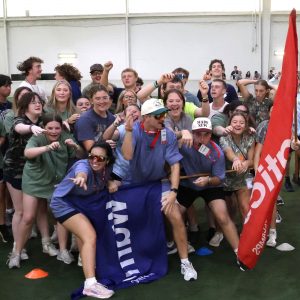
Students and leaders have fun during the camp.
MFuge, which is part of FUGE Camps, presented a vibrant, Christian and faith-enriching experience on campus from Monday, June 8-Friday, June 12. The event featured daily worship, filled with contemporary Christian music and inspiring messages about God; Bible studies; church group time; and daily trips into communities throughout the region to perform mission work.
The days were filled with enthusiastic site send-offs that had the students jumping and yelling with joy. One of the concluding activities was a jubilant mega relay.
“As a Christian university, we value the opportunity to help people draw closer to God,” said Dr. Scott Hummel, Tusculum’s president. “Tusculum’s students have multiple ways to build their relationship with Christ during the academic year, and we are grateful other students choose our university as a place to strengthen their faith. We were thrilled to watch these students further develop spiritually and have great fun during their week on campus, and we commend FUGE for providing an exceptional week of activities to support them.”
Thoughts from student participants
Kenna Bass, a rising high school sophomore who lives in Forrest City, North Carolina, and Bryson Olmstead, a rising senior from Spartanburg, South Carolina, particularly enjoyed the mission element of camp.
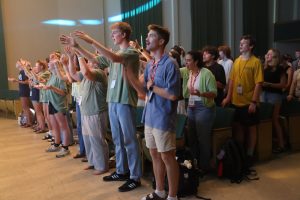
Worship was a key element of the camp.

Participants have fun during the mega rally at the camp.
The two visited a nursing home to talk to the residents about Jesus and offer to pray for them. They went to a park and wrote chalk messages containing Bible verses and inspiring messages for those who would see them. And they headed to a splash pad and went door to door in a neighborhood to evangelize. Adults from the students’ churches, who served as chaperones, accompanied the students to the work sites so they could help watch the children, guide them and deepen their connections with them.
“A big part of my life is talking to others about Jesus and being able to show how much I love him and how much he loves me,” Kenna said. “I think my calling is to spread the gospel and tell people about Jesus. A really important part about Christianity is discipleship and making sure other people know about Jesus.”
Bryson understands the importance of sharing God’s messages from personal experience. He was a foster child when he was younger, and he discovered the gospels through ministers who would come to his group home.
“Christianity is a shared religion,” he said. “It was meant to make disciples and to share it and to grow together because we’re all God’s children. If my evangelism or acts of service could direct in the slightest a kid like me to the gospel, then it would be a success. All of it would be worthwhile because I just want to impact the community like those people who were brave enough to share their faith with me and changed the whole trajectory of my life.”
Kenna said the camp helped her realize how much she and everyone else need Christ. Bryson said he has struggled with evangelism during his life but said that aspect of his faith grew during FUGE. He wants to continue to improve in that area and thinks he has the ability to develop that gift more because he is an articulate person. He said the camp benefited him by pushing him out of his comfort zone.
Information from FUGE leaders
FUGE, which is a student event arm of Lifeway Christian Publishing in Brentwood, Tennessee, has roots dating to 1979 and was originally known as Centrifuge.

Prayer was an important part of the camp.
Joe Hicks, manager of FUGE camps, said the purpose of the mission component of camp is for the students not just to be discipled but also to put their faith into works by going into the community. Other types of service work students perform at FUGE camps are painting; construction; yard work; and serving at vacation bible schools, backyard kids clubs, clothes closets and food pantries.
He also touched on what Bryson mentioned about one of the camp’s goals.
“A lot of times kids come to camp, and they need to be spun out of their peer groups from their church so that God can speak to them more fully and have them hear what He has to say,” Hicks said. “This is designed to give them an additional perspective to help them in their faith development, and by the end of Day 2, they will have developed some additional lifelong friendships. But we still ensure they have time during the day to spend with their own church family so they can share what they learned. Oftentimes, their fellow church members have learned the same lesson.”
Lily Queen, director of the Mid-America travel team, which runs the camps in that part of the country, said the theme for those who attended the one at Tusculum was the Good Shepherd. That meant the camp focused on Psalms 23, King David’s story and how the Lord walked him through his life. She said the Bible study section of camp and the sites chosen for mission work encompassed that theme.
Another part of the camp is called “hang time,” which is a leisure period where students can play volleyball or basketball, for example. During that time, FUGE staff members talk to the students and see how they can minister to them.
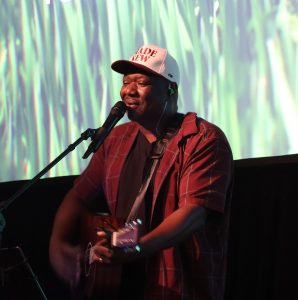
Contemporary Christian music was a huge part of the experience.
When students attend camp, the setting is ideal. They are away from their regular lives, are not taking care of chores or having to navigate the daily challenges that arise. But afterward, they return home, and the glow of a week away can potentially dim. FUGE attempts to prevent that.
“Our staffers talk a lot about that with the students because we know about the potential for that,” Queen said. “This is an easy place to want to follow the Lord because we make it fun, but we understand they go home and things can be different. We had a roundtable for the students’ church leaders to pour into each other and share wisdom. That fuels the adults to be able to go home with their students and assist them with applying what they learned to their everyday lives.”
Those church leaders also received a Bible study curriculum that they can use with the students when they return from camp.
“If you learn to take the same practices from camp back home, you will find that it’s not a mountain and a valley and a mountain and a valley and a mountain and a valley,” Hicks said. “You can actually trim them off and have a much steadier growth path and a nice trajectory toward being a fully developed disciple of Christ.”
Queen said FUGE’s motto is life-changing camps.
“Sometimes we see first-time salvations where students accept Jesus and learn what that relationship looks like,” she said. “But we also see things like rededications or calls to ministry. Chains are broken where students are going through really hard times and we’re able to help them get through those things and point them in the right direction. We want students to experience life change that can catapult them into a life closer with Jesus.”
Comments from Dr. Hummel
As he spoke with the students, Dr. Hummel highlighted that the world needs more Christian teachers, more Christian business leaders as well as Christians in other professions. That is important because wherever they go, they take the gospel with them.
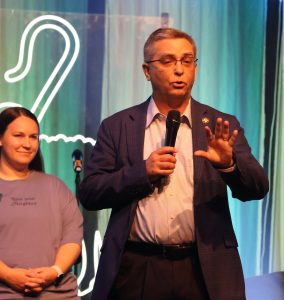
Dr. Scott Hummel, right, Tusculum’s president, speaks to the students. On the left is Lily Queen, director of the Mid-America travel team for FUGE Camps.
He also told the students that it is important for them to discover their “why,” an all-encompassing question that encourages students to examine something as narrow as the reason they are attending a specific college and as broad as the reason they are on this planet.
“God has placed an important and unique why in each and every one of you,” Dr. Hummel said. “Each and every one of you has tremendous value. Your why is important because God has a mission and has a Great Commission, and he wants and expects you to be part of that.”
One of the benefits of attending Tusculum, Dr. Hummel said, is that students will be to discover their calling and their purpose. He also said many students at the university complete their studies as changed individuals because of what they learned at Tusculum.
Dr. Hummel highlighted the spiritual growth students can experience at Tusculum. One of the ways that happens is by living in the Discipleship Living-Learning Center.
The center currently contains three university-owned houses – two for males and one for females – that enable students in the early stages of college to live in community. They pursue spiritual growth together and encourage one another through discipleship, prayer, Bible study and daily life.
The students also receive assistance from peer mentors and the Rev. E.J. Swatsell, director of spiritual life and special projects. The peer mentors are older students who build relationships with the newer students, pray with them, encourage them through challenges and help them navigate college life from a Christ-centered perspective.
Students who live in the center receive a $2,000 scholarship per year.
FUGE will offer four camps at Tusculum in 2027. To learn more, please visit https://fugecamps.lifeway.com/. Individuals or organizations that would like to hold a camp at Tusculum should email Greg Fay, director of continuing education and camps, at gfay@tusculum.edu. Further details about the university are available at www.tusculum.edu.