


GREENEVILLE – A Tusculum University biblical scholar is presenting a different viewpoint on the role of scribes in the New Testament, articulating that they were not the composers of content in that book as many of his colleagues have contended.
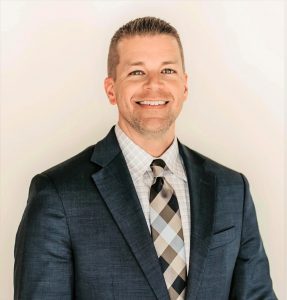
Dr. Travis Williams
Dr. Travis Williams, professor of religion, has authored the recently published book “Secretaries in Ancient Letter Writing: Influences on the Composition of New Testament Epistles.” The book, inspired by his earlier research on 1 Peter, was the result of his analysis of more than 8,000 ancient letters.
“For several generations, scholars have often explained differences in style, vocabulary and theology among New Testament writings by appealing to the use of secretaries,” Dr. Williams said. “According to this view, authors such as Paul, Peter, James and Jude may have relied on highly skilled scribes who exercised substantial creative freedom in composing letters, thereby accounting for many of the differences that have led scholars to question traditional authorship claims.”
His extensive research, however, comes to a different conclusion.
“After examining literary, documentary and epistolary evidence from across the ancient Mediterranean world, I found that the surviving sources do not allow us to determine how frequently secretaries were employed,” Dr. Williams said. “More importantly, the clearest examples of secretarial involvement typically portray scribes as recording or transmitting an author’s words rather than independently composing content. In short, the evidence does not support the widespread assumption that ancient secretaries routinely functioned as co-authors.”
In 2023, Dr. Williams published “1 Peter: A Critical and Exegetical Commentary,” which he co-authored with David G. Horrell, professor of New Testament studies and director of the Centre for Biblical Studies at the University of Exeter. His research for that book led him to write “Secretaries in Ancient Letter Writing: Influences on the Composition of New Testament Epistles.”
In addition to this book, Dr. Williams was recently a plenary speaker at the Text and Manuscript Conference in Dallas. At the gathering, he presented his paper “Reading 1 Peter with the Scribes: Pronominal Variation, Scribal Alteration and the Editio Critica Maior.”
“This paper examined how patterns of pronominal variation in the manuscript tradition of 1 Peter can illuminate scribal habits, textual transmission and the relationship between textual criticism and exegesis,” Dr. Williams said. “Drawing on evidence from the ‘Editio Critica Maior,’ the paper explored how scribes altered pronouns in ways that reveal both accidental and intentional tendencies within the transmission history of the text.”
Dr. Williams’ paper is slated for publication in a forthcoming volume of “The Editio Critica Maior, Exegesis and Translation.”
A professor at Tusculum since 2010, Dr. Williams has been a prolific researcher, with particular expertise in Catholic Epistles of the New Testament and the Dead Sea Scrolls. He has presented his work on the Dead Sea Scrolls in multiple venues open to the public. He has also been the featured speaker at Tusculum’s Stokes Lectures on Theology and Religion, previously known as Theologian-In-Residence.
Presently, he is writing a book that examines literacy, education and authorship in early Christianity. It focuses on James, Peter, John and Jude, the authors traditionally associated with the Catholic Epistles.
Individuals can learn more about Dr. Williams at https://web.tusculum.edu/directory/employee/williams-travis/. They can also read many of his publications at https://tusculum.academia.edu/TravisWilliams. Additional information about the university and its religion academic program can be accessed at www.tusculum.edu.