Tusculum to host “For the Love of the People” exhibit starting Feb. 21 in Clem Allison Gallery


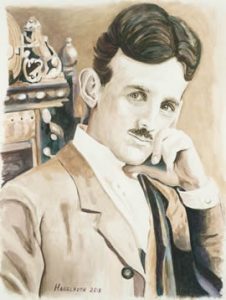
 Tusculum University will host “For the Love of the People,” an exhibit of portraits by local artist Steve Haselroth that consist of famous people and others in his personal life, all of whom have meaningfully influenced the world.

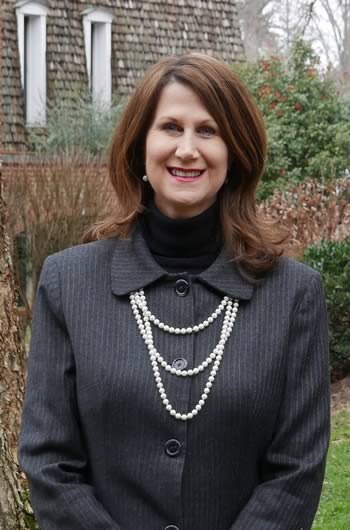
Among the people whose portraits will be shown in the exhibit are Dr. Martin Luther King Jr., Amelia Earhart, Nikola Tesla, Rabbi Yitzhak Kaduri and Winston Churchill. Portraits on a personal level include Haselroth’s wife, Janet, and son, David.

“For this particular exhibit, I have assimilated a collection of individuals from our history and from personal acquaintances that have had an impact on the world around them,” Haselroth said. “In each case, decisions of selflessness have been self-imposed, sometimes leading to the ultimate sacrifice, all for the love of those around them and leading to the benefit for others. In all cases, the individuals have had value systems that deserve the admiration of others.”

Bill Bledsoe, program director and an assistant professor for Tusculum’s art program, said one of the exhibit’s key elements is that all portraits convey the same visual strength in their structure.

“The idea is that ultimately, when you look at both of them, they actually carry the same weight in intent and introspection,” Bledsoe said. “That’s a tall order, but he succeeds in bringing the same amount of visual interest to an anonymous person as it would be with someone that you know.

“There is a similarity in scale, and the paintings work well with one another because they’re roughly the same scale and they’re done in the same medium for the most part, which is water color and color pencil.”

Bledsoe said Haselroth also likes to use a lot of negative space to highlight the nuances of each subject. The portraits are generally of people from the waist to their head.

“Each individual represented at this exhibit encapsulates the modus operandi to excel in life’s challenges, ultimately enhancing his or her community,” Haselroth said.

Haselroth’s roots in the visual arts date to his childhood. He is a retired teacher who was granted the honor of Cum Laude with the Tennessee Arts Academy Alumni Association in 2015. He has also served in the Navy, including as a medical planner and acting commander, amphibious task force surgeon, aboard the USS Saipan during the onset of the Iraq War in 1991.

The exhibit will kick off Thursday, Feb. 21, with a free, public reception from 5-7 p.m. in the Clem Allison Gallery in the Shulman Center. The portraits will remain available for viewing in the gallery until Thursday, March 7.
Tusculum University professor chosen for Yale seminar about the Civil War and modern-day events


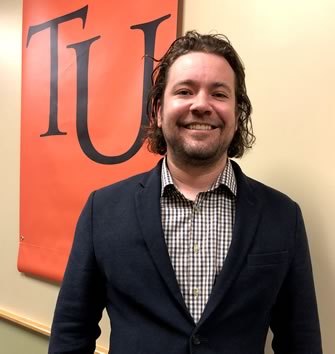
Dr. Jeff Perry

A Tusculum University professor has been selected to participate in a seminar at Yale University this summer that will explore the Civil War and modern-day events associated with that period in U.S. history.

Dr. Jeffrey Perry, an assistant professor of history, will join 24 other full-time faculty members in history and related fields for “The Civil War in American Memory.” David Blight, Class of 1954 professor of American history at Yale and director of the university’s Gilder Lehrman Center for the Study of Slavery, Resistance and Abolition, will lead the seminar.

The event is a partnership between the Gilder Lehrman Institute of American History and the Council of Independent Colleges.

“We’re proud of Dr. Perry, who is demonstrating excellent scholarship and tremendous promise at an early stage in his career,” said Dr. Madison Sowell, Tusculum’s provost and vice president of academic affairs. “He will be an outstanding representative of Tusculum and contribute thoughtfully and insightfully to the discussions at this prestigious seminar. His selection illustrates the superb caliber of faculty at Tusculum and the high quality of education our students receive.”

The institute’s website says the seminar’s primary purpose is to provide a forum for comprehending and analyzing why the slavery, Civil War and Reconstruction period is still an unending dilemma in American historical consciousness.

Seminar participants will consider secondary works on Civil War memory and discuss theoretical texts on the nature and significance of collective memory across time and culture and explore in depth the war’s 50th, 100th and 150th anniversaries. Participants will also discuss crises and debates about Civil War monuments and symbols in recent years, such as the events in Charleston, South Carolina, in 2015 and in Charlottesville, Virginia, in 2017.

Dr. Perry, a Tusculum faculty member since 2017, teaches Civil War and Reconstruction at Tusculum, and he is preparing to shift his research focus into that area. He has specialized in early American history with a concentration on the religious history of the post-Revolutionary War period. His book “Envisioning Authority in America: Church Discipline and Local Law in Kentucky: 1780-1845,” is under contract for publication with Johns Hopkins University Press.

Institutions such as the National Endowment for the Humanities, the Kentucky Historical Society and the Tennessee Historical Society have funded his research.

“I am looking forward to discussing one of the most significant periods in American history, as well as related current events, with my colleagues across the country,” Dr. Perry said. “My selection shows the high regard the education community has for Tusculum and represents a tremendous professional growth opportunity for me. Participating in this seminar will expand my knowledge of history and enable me to provide an even better learning experience for my students.”

Dr. Perry received his bachelor’s and master’s degrees in history from the University of South Florida and his doctorate in history from Purdue University.

Tusculum professor discusses religion in colonial America at Theologian-In-Residence series


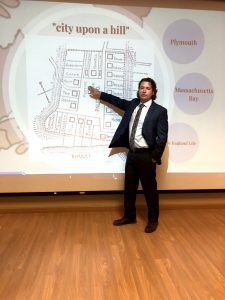
Dr. Jeffrey Perry, an associate professor of history at Tusculum University, delivered an insightful lecture “Religion in Colonial America” Tuesday, Feb. 5, in the Chalmers Conference Center of the Scott M. Niswonger Commons.

Kicking off the 2019 Theologian-In-Residence series, Dr. Jeffrey Perry, an associate professor of history at Tusculum University, delivered an insightful lecture entitled “Religion in Colonial America.”

The lecture, delivered Tuesday, Feb. 5, in the Chalmers Conference Center of the Scott M. Niswonger Commons on the Tusculum campus, focused on the role of religion in the English colonies from their settlement in the early 17th Century through the “Great Awakening” of the mid-18th Century. Dr. Perry also provided historical context by discussing the origins of the Protestant Reformation through the actions of Martin Luther.

“To understand religion and colonial America, we have to begin back in Europe at an innocuous event in 1517 as Martin Luther nailed his 95 Theses to the wall of the church door,” Dr. Perry said. “He did not know, of course, this was going to instigate a revolution. Luther, upon doing it, was trying to instigate a debate – a debate about indulgences specifically.”

Dr. Perry highlighted criticisms of the Catholic Church at the time that had been growing, including priests who did not adhere to the celibacy vow. Another issue was that priests, monks and nuns did not have to take part in civic duties, such as serving in the military and paying taxes.

So when Luther posted his 95 Theses, it mushroomed into the Protestant Reformation and the individualizing of faith, he said. Reformers emphasized a new relationship with God and a belief that the Bible was the sole authority.

In England, King Henry VIII denounced Luther in 1521, which led Pope Leo X to name him the “Defender of the Faith.” But the good relationship changed about a decade later when Henry divorced his wife, Catherine of Aragon, leading to his excommunication. Henry responded by securing through Parliament another title – head of the Church of England – bringing the Protestant Reformation to England and strengthening his power.

There were ebbs and flows in the monarchy’s approach toward Catholicism in subsequent reigns, with King Edward VI moving the country further away, Queen Mary I restoring the faith and Queen Elizabeth I bringing back Protestantism.

Turning to North American colonies, Dr. Perry noted the Pilgrims and Puritans that established colonies at Massachusetts Bay and Plymouth sought religious freedom and uniformity.

“The Protestants who built the first colonies in New England wanted to make Christianity the central part of these colonies – spiritually, of course, but also very much physically,” he said.

Dr. Perry described the Pilgrims as radical separatists who believed the Church of England could not be redeemed because it is had gone beyond reform. They were not pleased with remaining Catholic rituals, music that still retained a Catholic flavor and the prevalence of Arminian doctrine, which is the idea that individuals can make choices that affect their salvation, he said. Pilgrims are Calvinists, who believed their salvation hinged on God, he said.

Later came the Puritans, who shared the same grievances with the Catholic Church, but they were idealists rather than separatists, Dr. Perry said. He said they believed they could fix the problems within the Church of England through reform. By the early 1640s, 16,000 of them had arrived at Massachusetts Bay.

Dr. Perry said they remain a misunderstood group, which focused on family, developed congregational discipline, but were not unbending. Like the Pilgrims, the Puritans believed their salvation was dependent on God.

In Virginia, King James I chartered the Virginia Company of London to bring Christianity to Indians. Dr. Perry noted the colony’s first legislative assembly, Virginia’s House of Burgesses, met in 1619, with religion as a primary concern. Ministers were required to preach on Sunday, and all colonists were required to attend worship services or face civil punishment.

In 1624, Virginia became a royal colony, and the Church of England was established in the commonwealth. Taxes were imposed to support the Church of England, and they had to be paid not only by Anglicans but also members of other congregations, he said.

“Between this time and the 1780s, if you were born in Virginia, you were by default an Anglican and a member of the parish in which you were born,” Dr. Perry said. “That is going to change, motivated by many of the congregations you are part of, Presbyterians and Baptists especially, who later took on the church-state establishment.”

He discussed the major changes that occurred in the colonies in religious affiliation. Before 1690, 90 percent of the population was Congregationalist or Anglican, but that number dropped to 35 percent by 1770. As the American Revolution neared, 18 percent were Scottish and Scots-Irish Presbyterians and 15 percent were English and Welsh Baptists. Quakers, German Lutherans and German Reformed each had about 5-10 percent.

“Part of this diversity is because of the establishment and growth of what we call the middle colonies – New Jersey, New York, Pennsylvania and even Delaware,” Dr. Perry said. “These are also known as restoration colonies because they were established during the Restoration Period. Philadelphia and Pennsylvania in particular became sort of the center of American Protestantism.”

Dr. Perry said the founding of Pennsylvania has origins in the Quakers, a religious group that began in the mid-17th Century in England, with George Fox as an early leader and founder. This group’s belief system emphasized an inner light, that everyone could find religious truth that was not found solely in the Bible.

During his presentation, Dr. Perry also talked about the colonization of Maryland, which was chartered to George Calvert in 1932. The philosophy behind that colony was to create a refuge for Catholics who were not as welcome in other colonies. In spite of this plan, Catholicism did not dominate in that colony, with only four parishes of this denomination by 1650. Catholics remained a minority of the settlers, he said.

The lecture also discussed a variety of prominent people who played roles in religion’s development in the colonies, including Roger Williams and Anne Hutchinson, who criticized New England’s religious and civil authorities. They were banished, but their calls for religious liberty and free grace were influential later, Dr. Perry said.

He quoted Williams from 1644 as saying, “All civil states, with their officer of justice, in their respective constitutions and administrations, are proved essentially civil and, therefore, not judges, governors or defenders of the spiritual, or Christian, state and worship.”

Another person Dr. Perry highlighted was William Penn, who converted to Quakerism and was imprisoned multiple times in the 1660s due to his strong advocacy of his beliefs. Nonetheless, King Charles II of England in 1681 granted him a large tract of land in North America, perhaps as a way to quell the commotion the Quakers had caused, he said. But he said this decision worked out well for Penn, who desired to create “a holy experiment” in Pennsylvania.

“When he first travels to Pennsylvania in 1682, he writes up its frame of government, the first of a handful of them,” Dr. Perry said. “Although he created a very unwieldy system of government, it had some important elements that become central to our constitution 100 years later. One of them is religious freedom. Another one is no taxation without representation. And then there was the due process of law.”

Dr. Perry will also lecture in week two of the four-week series, with a talk called “A Revolution in Church and State.” That lecture will be held Tuesday, Feb. 12, in Chalmers from 10 a.m.-12:30 p.m.

To reserve a seat and receive lunch in the Tusculum cafeteria afterward, please call the Institutional Advancement office at 423-636-7303 or email kkidwell@tusculum.edu. The session and meal are free, but Tusculum appreciates donations.

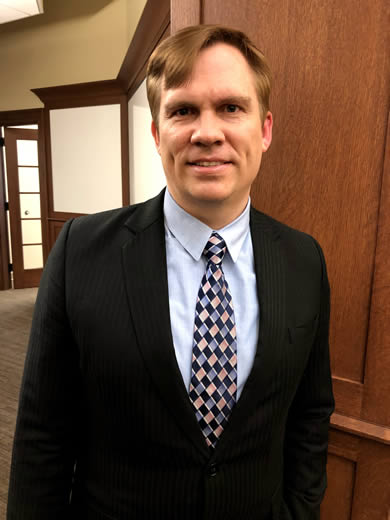
Dr. Adam Hickenbotham joins Tusculum’s Niswonger College of Optometry, brings 15 years of experience


Dr. Adam Hickenbotham

Dr. Adam Hickenbotham, a 15-year optometric professional who holds two doctorate degrees and has served in academia, private practice and executive positions in private industry has joined the leadership team of the Niswonger College of Optometry at Tusculum University.

A founding faculty member, Dr. Hickenbotham is the assistant dean for research and chief of surgery at the Niswonger College of Optometry. In addition, he serves as director of institutional research for Tusculum’s expanding and innovative College of Health Sciences.

“Adding Dr. Hickenbotham, who is well-versed in the most up-to-date methods of practice for the optometric profession is another feather in our cap,” said Dr. Andrew Buzzelli, the Niswonger College of Optometry’s founding dean and executive vice president of the College of Health Sciences. “We are focused on developing the premier college of optometry in the nation, one that will lead in research and serve as a model for patient care. Dr. Hickenbotham will play a vital role in accomplishing our goals.”

The Niswonger College of Optometry, created to address the prevalence of ocular disease in Central Appalachia, is engaged in the accreditation process. It has achieved the first stage and has two more to complete with the Accreditation Council on Optometric Education before it can recruit and enroll students. Pending the receipt of preliminary approval for accreditation, Tusculum is projecting to enroll the first class of 70 students in the four-year program in fall 2020.

As part of the accreditation process, the Niswonger College of Optometry has to demonstrate it is ready to accept students. That requirement has led the Niswonger College of Optometry to hire administrators and faculty members and begin renovating the building that will house the teaching and training activities.

“As we proceed toward establishing the Niswonger College of Optometry, Tusculum will have an opportunity to transform medical eye care in the region in partnership with other providers,” Dr. Hickenbotham said. “At the Niswonger College of Optometry we are seeking to transform the training of optometric physicians to align ourselves with the extensive medical training provided by allopathic and osteopathic schools. We can have a lasting impact on future generations, and I am excited to be part of that development.”

Dr. Hickenbotham founded ThruFocus Optics, an ophthalmic medical device company based in Berkeley, California, which is developing innovative new treatments for presbyopia, including a laser surgery currently undergoing clinical trials. Dr. Hickenbotham has been awarded numerous U.S. and international patents in laser medical devices.

During his career, he has owned and operated a private optometry clinic, overseen delivery of on-site medical care at more than 20 skilled nursing facilities, managed refractive surgery clinics, directed marketing efforts for ophthalmology practices and managed clinical trials internationally.

Dr. Hickenbotham also has experience in academic settings, having taught a variety of subjects, including laser surgery, optics, pharmacology, physiology, anatomy and optometric methods. He served as a lecturer and senior engineering adviser for the University of California, Irvine, and as a clinical research scientist and assistant researcher at the University of California, Berkeley. He also has international experience, establishing a LASIK Center in Phuket, Thailand, and serving as an optometry lecturer in optics at Ramkhamhaeng University in Bangkok, Thailand.

He began his teaching career as an elementary and high school teacher in Los Angeles County in California.

Dr. Hickenbotham has a bachelor’s degree in psychology from Brigham Young University and a master’s degree in public health and a doctorate in optometry from the University of California, Berkeley. He also has a doctorate in bioengineering as part of a joint program between the University of California, San Francisco, and the University of California, Berkeley.

He was the first optometrist to be accepted into Harvard Medical School’s Surgical Leadership Program and successfully completed the Clinical Research Conduct and Management Program as well as the Clinical Scientist Development Program with the University of California, Berkeley.

Dr. Hickenbotham comes to Tusculum from the Kentucky College of Optometry, where he served as an associate professor and a founding faculty member for about 2 ½ years. He served as chairman of the Academic Rank and Promotions Committee and Scholarship and Awards Committee. He also held leadership positions in the Academic Standards Committee and the Admissions Committee.

“The Appalachian region is in dire need of medical eye care providers,” Dr. Hickenbotham said. “We have the highest incidence of blindness in the country here and would benefit greatly with an increase in highly skilled optometric physicians. There is a severe shortage of doctors throughout the country, and optometric physicians must be expertly trained to help alleviate the current health care crisis that we are experiencing, particularly in Appalachia.

“Optometric physicians are primary care providers who are often the first to diagnose cardiovascular diseases, such as diabetes or hypertension, through manifestations in the eye. We, as optometrists, are privileged to improve the quality of life for our patients.”

“Little Shop of Horrors,” a delightful Sci-Fi musical, opens March 1 at Tusculum University


Theatre-at-Tusculum will present the charming and hysterical classic “Little Shop of Horrors” for seven performances beginning Friday, March 1.

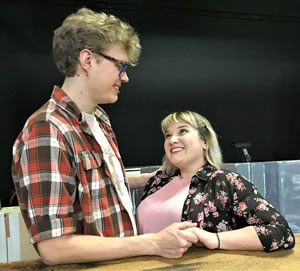
Maxwell Reed as Seymour, left, and Molly Doss as Audrey will perform in Theatre-at-Tusculum’s presentation of “Little Shop of Horrors.”

With tongue firmly planted in cheek, “Little Shop of Horrors” never fails to entertain with its story about Seymour Krelborn, a down-and-out skid row floral shop assistant, who becomes an overnight sensation when he discovers an unknown plant species that has a mysterious craving for fresh blood.

Soon the plant, affectionately named Audrey 2, grows into a manipulative, rhythm-and-blues-singing carnivore that offers Seymour fame and fortune in exchange for feeding its growing appetite. The plant finally reveals itself to be an alien creature poised for global domination.

“Little Shop of Horrors” features the songs “Somewhere That’s Green,” “Dentist!” “Suddenly, Seymour” and “Suppertime.”

This spoof of 1950s Sci-Fi movies has become a household name, thanks to a highly successful film version and a score by the duo of Howard Ashman and Alan Menken (Disney’s “The Little Mermaid,” “Beauty and the Beast” and “Aladdin”). The “Little Shop of Horrors” musical, which premiered in May 1982, is based on the 1960s Roger Corman Sci-Fi horror flick of the same name starring a very young Jack Nicholson. A 1986 movie version of the musical directed by Frank Oz and starring Rick Moranis and Ellen Greene is considered a cult classic.

The Theatre-at Tusculum production is being directed by Brian Ricker and will take place in the Behan Arena Theatre in the lower level of the Annie Hogan Byrd Fine Arts Center at Tusculum University in Greeneville. The show will span two weekends with performances on March 1, 2, 7, 8, 9 at 7 p.m. with matinee performances on March 3 and 10 at 2 p.m.

Ricker, assistant director of Tusculum University Arts Outreach and a veteran actor of the Greeneville stage, has directed successful productions for Theatre-at-Tusculum and the Greeneville Theatre Guild, including “The 25th Annual Putnam County Spelling Bee,” “Urinetown: The Musical” and Tennessee Williams’ “Cat on a Hot Tin Roof.”

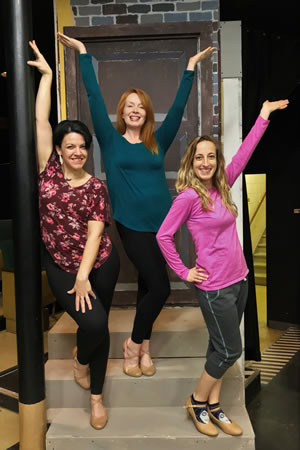
Left to right, Erin Schultz as Ronette, Jodie Carter as Crystal and Sara Claiborne as Chiffon will perform in Theatre-at-Tusculum’s presentation of “Little Shop of Horrors.”

“Little Shop of Horrors” features many of the area’s favorite actors, including:

  • Maxwell Reed who plays Seymour and is known for his performances as Hero in “A Funny Thing Happened on the Way to the Forum” and Noah Claypole in “Oliver!”
  • Molly Doss who plays Audrey and is making her second Tusculum theater appearance after portraying one of the exotic birds “Tarzan” in the fall in addition to many other regional theater credits, including Tracy Turnblad in “Hairspray”
  • Greeneville favorite Chris Greene, who plays shopkeeper Mr. Mushnik and is known for his prior roles as Fagin in “Oliver!,” Oscar in “The Odd Couple” and Gomez in “The Addams Family”

Playing the sinister and sadistic Orin Scrivello, D.D.S., will be Tusculum student and Nebraska native Trevor Kahland who made his Tusculum theater premiere in “Tarzan” as the great ape, Kerchak. Voicing the soulful Audrey II will be Greeneville native Jason Shoemaker. Rounding out the cast are three local actresses who will amaze audiences with their talented voices: Jodie Carter, Sara Claiborne and Erin Schultz as the trio of skid row dwelling street urchins.

“Little Shop of Horrors” is musically directed by Kasie Shelnutt and choreographed by Heather Allen. The show will be stage managed by Christian Emery-Howard, with set design by Frank Mengel and Garry Renfro and lighting design by Beth Schnura.

Tickets are $15 for adults and $12 for Seniors (60+). The show is rated PG-13 for some gruesome and gory content as well as strong language. Seating is general and is first come, first served. The ticket box office will open 90 minutes prior to each show time, with the house opening 60 minutes prior to each show time. Tickets may be purchased with cash or check only. No credit or debit cards will be accepted. To reserve tickets please call 423-798-1620 or email jhollowell@tusculum.edu.

Theatre-at-Tusculum is under the auspices of Tusculum University Arts Outreach which is led by Artist-in-Residence Marilyn duBrisk, Assistant Director Brian Ricker, Coordinator Jennifer Hollowell, Technical Director Frank Mengel and Costume Director Erin Schultz. It is supported in part by a grant from the Tennessee Arts Commission, Hearts for the Arts, and many generous donors. For more information about this production or other programs, please contact the TUAO office at 423-798-1620 or visit arts.tusculum.edu or Facebook: Tusculum University Arts Outreach.

Tusculum English Professor develops program for University that identifies acts of kindness


Two people are heading for the same building at roughly the same time, and the first one to arrive holds the door open so the other can pass through the entrance first.

Consider other instances. A person notices some trash in the grass and stops to collect it and put it in a waste container. Someone learns another person is experiencing homelessness and steps forward to help him or her find a new place to live. A person knows someone who does not have transportation to a doctor’s appointment and offers to drive him or her there.

Each of these cases represents an example where someone has demonstrated kindness toward a fellow human being or their surroundings. They are noteworthy because they showcase the best in a person, but many times these acts of benevolence go unnoticed.

Tusculum University sees the value of recognizing individuals within the Tusculum family who show goodwill toward others or their environment. Based on a recommendation from Heather Elouej, an associate professor of English and the writing program coordinator at Tusculum, the university has established a new initiative called Caught You Being Good.

“We regularly see acts of kindness at Tusculum’s three locations but have not always thought about the importance of calling attention to them,” Elouej said. “Many do not seek recognition for good acts, but as a community, this program is a great reminder of the giving spirit alive in so many people. Caught You Being Good sets a positive tone and might encourage others to adopt this mindset.”

Tusculum has established a simple process to honor people for their actions. The university has developed a form that can be completed on www.tusculum.edu in which the nominator identifies the person who has demonstrated kindness and explains what transpired. Nominators also have the option of printing that form and placing it in collection boxes in the Thomas J. Garland Library or in the Tusculum cafeteria. They can also submit using a special email address designated for this program.

Good acts can happen at Tusculum’s locations in Greeneville, Knoxville or Morristown or anywhere in the community.

Besides recognizing wonderful behavior, Caught You Being Good will lead to a student earning a $500 scholarship. Tusculum’s executive cabinet will award a $500 scholarship each academic year for the act deemed most worthy in the spring and fall semesters.

“This exceptional initiative Heather developed reinforces the kindness so prevalent at Tusculum and our commitment to civic engagement,” said Dr. James Hurley, the university’s president. “When people help others in need or demonstrate basic kindness, they benefit just as much as the recipient. This creates an atmosphere that brings out the best in everyone and attracts students and staff members who want to study and work in a caring environment.”

Elouej was inspired by a similar program she saw firsthand when she was a fifth-grade student at Capitol Hill Fifth Grade Center in Oklahoma City. In that program, administrators, teachers and students were on the lookout for students who showed good behavior. The adults would detail the good acts on slips of paper, and the reward for students was candy.

For the Tusculum version, Elouej has expanded the eligible recipients of nominations to cover students, faculty and staff.

Established Monday, Jan. 14, Caught You Being Good has already generated multiple nominations. For example, student Jessica Small was caught for ensuring that three students – a mother and her two daughters – had a ride to classes at Tusculum because they did not have a vehicle that was operating properly. Jessica was also credited with helping the mother, Mae Jones, take her 3-year-old son to an emergency department.

“This lady goes out of her way to help anyone in need,” Jones said. “I was recently in the hospital, and she checked on me daily and even came to my home to help care for me. God has truly blessed me this year, and Jessica is one huge blessing to the Tusculum family.”

Student Emily Brinton was commended for using her class research project to discuss the need for better campus policies and procedures to help prevent teen suicide in junior high and high schools in Oregon. Her work led to legislation being drafted and presented to that state in the fall.

Others have been nominated for items such as carrying a case of large water bottles for someone, listening to students’ cafeteria meal preferences, assisting a fellow employee who was facing an unexpected addition to his workload and helping a student run an errand.

“It was exciting and heartwarming to receive our first nomination within two hours of launching Caught You Being Good,” Elouej said. “My goal is to produce healthy competition of kindness and help people to be more aware of the way they treat others and display empathy for other people. I am looking forward to hearing about other acts of kindness and seeing this initiative continue to grow.”

For more information, please watch an interview of Elouej by Dr. Hurley at https://www.youtube.com/watch?v=I6-fMpyl2gc

Theologian-In-Residence Series Returns This Month


The popular Theologian-in-Residence program at Tusculum University will return for its 28th year in February to explore a range of religious topics for the community.

Tusculum will host the Theologian-in-Residence series on Tuesdays throughout the month. Each session starts at 10 a.m. and lasts until 12:30 p.m. in the Chalmers Conference Center of the Scott M. Niswonger Commons. Those who register will be eligible to enjoy a free luncheon afterward in the Tusculum cafeteria.

Dr. Jeffrey Perry, an assistant professor of history at Tusculum, will share his research at the Feb. 5 and Feb. 12 sessions, and Dollie Boyd, the university’s director of museums, will provide her insights at the Feb. 19 and Feb. 26 sessions. They will discuss subjects touching on Colonial America, the Revolutionary Era, the founders of Greeneville College and Tusculum Academy and the education of women in the 19th century.

Perry specializes in early American history, with a focus on the legal and religious elements of the post-Revolutionary period, according to a news release. His book “Envisioning Authority in America: Church Discipline and Local Law in Kentucky: 1780-1845,” is under contract for publication with Johns Hopkins University Press.

Boyd oversees the Doak House Museum and the President Andrew Johnson Museum and Library. In her nine years as the leader, the museums have received several grants from multiple organizations and awards from the Tennessee Association of Museums. She has contributed to Tusculum’s continuing development by adding educational programs for children and adults. In March, she will become president of the state museum association.

“We’re thrilled to reinforce our close connections with the community and our Judeo-Christian heritage with highly informative presentations from our subject matter experts,” said Kim Kidwell, director of the Tusculum Fund, who is organizing the series. “Theologian-in-Residence has always provided a high-quality experience for our guests from the community, as well as members of the Tusculum family, and this year’s series will again enthuse our audiences and shed valuable light on the past.”

The session dates and their subjects are:

  • Feb. 5, “Religion in Colonial America” — This session will focus on religion’s role in England’s North American colonies from their settlement through the Great Awakening of the mid-18th century. This session will examine the variety of church-state relationships developed from Massachusetts to the Carolinas and the central role religion played in colonial society.
  • Feb. 12, “A Revolution in Church and State” — This session will explore the religious landscape of the Revolutionary Era and specifically address the rise of once marginal groups such as the Baptists and Methodists and the competition for souls on the frontier. Revivals of the mid-18th Century set the stage for Americans to question religious and civil authorities.
  • Feb. 19, “‘I will never make way for the Devil’: The Differing Presbyterian Theologies of the Founders of Greeneville College and Tusculum Academy” — This session will concentrate on Hezekiah Balch and Samuel Witherspoon Doak. Although they were both Presbyterians, they held differing views of religious ideology.
  • Feb. 26, “The Role of Presbyterians in the Education of Women in the 19th Century” – The 19th Century experienced an exponential rise in the number of colleges for women and previously all-male higher education institutions becoming co-educational. This movement was controversial. In an era when women could not vote and had little political and economic power, some saw the advanced education of women as wasteful or downright harmful. Tusculum admitted women for the first time in 1875.

All sessions are free, but Tusculum appreciates donations, organizers said in the release. Registrations are preferred for planning purposes.

To reserve a seat and lunch or for more information, call the Office of Institutional Advancement at 423-636-7303 or email kkidwell@tusculum.edu.

Tusculum receives award as a winner in 2018 Tennessee College Voter Registration Competition


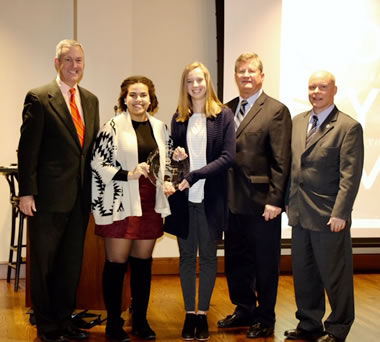
The Tennessee Secretary of State’s Office honored Tusculum University Thursday, Jan. 24. The university was a winner of the 2018 Tennessee College Voter Registration Competition. Pictured left to right are Secretary of State Tre Hargett, Tusculum sophomores Carmyn Tassone and Hanna Johnson, state Sen. Steve Southerland and state Rep. David Hawk.
The photo is courtesy of the Tennessee Secretary of State’s Office.

Facing a lecture hall full of Tusculum University students, Tre Hargett, Tennessee’s secretary of state, told them that someday one of them might be governor, a U.S. senator or the nation’s president.

If that is going to happen, he said, it is important they prepare themselves for this opportunity and participate in the electoral process. He encouraged students to not only register to vote but then to go to the polls and cast votes that reflect their views.

“Don’t vote my values and don’t vote the way you believe that I think you should vote,” Hargett said. “Vote the way that you believe you should vote based on your values and your principles. And don’t just accept what you see in 280 characters on Twitter or what’s a liked post on Instagram. Do your own research and vote the way you believe you should.”

Hargett was at Tusculum’s Meen Center Thursday, Jan. 24, to recognize the university as one of three winners in the 2018 Tennessee College Voter Registration Competition. He presented an award to Hanna Johnson and Carmyn Tassone, two sophomores who led a voter registration drive in the fall. Joining them for the presentation were state Sen. Steve Southerland, R-Morristown, and state Rep. David Hawk, R-Greeneville, who represent Tusculum in the state Legislature.

Hargett said he was not surprised Tusculum won in the private school category because of its previous involvement in registration drives.

This year, Johnson and Tassone set up tables for two days in the Scott M. Niswonger Commons to help students register to vote. They also conducted a voting activity where they asked students what foreign language class they would like to see on campus. Helping the students with their activities was Dr. Mary Cooper, an assistant professor of political science and director of the honors program at Tusculum.

“It’s important to vote, and it’s vital that our generation knows that it’s important,” Johnson said. “This is really our voice in society. If we don’t act on it, then nothing will ever change and we won’t have our voices heard. I feel like it’s a duty as a citizen, but it’s also a right that we have and we’re very privileged to be able to have that right.”

Tassone and Johnson put special emphasis on recruiting freshmen to register because these students did not have an opportunity to participate in the previous year’s drive, but they also sought students in more advanced years at Tusculum. In addition, they visited a few first-year experience classes.

“It’s very important to have every single voice heard,” Tassone said. “That one vote can be a change in anybody’s life, so I feel that it’s very important for everybody to have their own voice because it really can make a change – maybe not in your life but in others’ lives. And that’s why I find it’s so important.”

Hargett had similar thoughts.

“When you don’t vote, all you do is hand the power in your community, your state and your nation to those people that do,” he said. “I just happen to believe that you are better off participating in the process and helping be a part of making those decisions. It’s important who you send to Nashville, it’s important who you send to city hall and it’s important who you send to Washington because they are making the decisions that don’t just affect your present but they affect your future for many generations to come.”

Valentine Dinner and Swing Dance


The Tusculum University Pioneer Jazz Band will provide an exciting way to celebrate Valentine’s Day and support a good cause with a benefit dinner and swing dance at the General Morgan Inn.

The reception begins at 6 p.m. and dinner will follow at 6:30 p.m. Thursday, Feb. 14. Following the meal, the Pioneer Jazz Band will perform a wide selection of uplifting jazz standards and incorporate other special guests in the event. Dance lessons taught by Robin Beale will be available starting at 5:30 p.m.

The event will also feature a silent auction. Guests can bid on items until the start of the second dance set.

David Price, Tusculum University’s director of music, said the popular event, now in its sixth year, raises money for essential equipment to support the entire Tusculum band program.

“It’s an excellent opportunity to spend this special day with your spouse or someone else special in your life while supporting our efforts to provide high-quality musical events for the community,” Price said. “We look forward to this event every year and are grateful to bring the gift of music to our audiences.”

Ticket prices are $55 per person or $400 for a table of eight guests and include dance tickets, free dance lessons, the reception, dinner and a special dessert. Please call the General Morgan at 423-787-1000 in advance to request a vegetarian meal substitution. A cash bar will be available.

Special table reservations are available for larger-group seating by calling Price at 423-636-0550 or emailing daprice@tusculum.edu.

Tickets are available for purchase at the General Morgan or by contacting Price. A hotel package special is also available by reaching out to the General Morgan.

This year, in preparation for the event, Tusculum will hold swing dance lessons at 7 p.m. Tuesday, Jan. 29, and Thursday Feb. 12, in the Chalmers Conference Center in the Niswonger Commons on campus. The lessons are free to anyone who has tickets to the Feb. 14 event. Dance lessons for those not attending the Valentine’s Day event are $10 per person.

Tusculum’s band program began in 2010 with the creation of the Pioneer Pep Band. Since then, the program has added a concert band, jazz band, marching band, handbell choir and several small ensembles. The groups play several events each year on campus and in the community.


Valentine Dinner and Swing Dance


Tusculum hosting talk on implicit bias; Tennessee officials to present voter registration award


A staff member of the National Underground Railroad Freedom Center in Cincinnati will deliver an informative talk Thursday, Jan. 24, at Tusculum University about the impact of implicit bias in society.

Ryan Wynett, manager of the implicit bias initiative at the freedom center, will deliver his talk, “OPEN YOU MIND: A Deep Dive to Understanding Bias” at 5 p.m. in the Meen Center lecture hall. The free event is part of Tusculum’s celebration of the Dr. Martin Luther King Jr. holiday and is open the university’s students, faculty and staff as well as the community.

In addition to Wynett’s presentation, Tre Hargett, Tennessee’s secretary of state, and state Rep. David Hawk, R-Greeneville, will attend to honor Tusculum as one of three winners of the 2018 Tennessee College Voter Registration Competition. Carmyn Tassone and Hanna Johnson, two members of Tusculum Bonner Leaders Program who spearheaded a voter registration drive in September at Tusculum that added 39 students to the rolls, will receive the award from Hargett.

“We are thrilled to have Ryan join us and share valuable information about how bias can influence our thought process even if we are not conscious it is happening,” said Dr. Madison Sowell, Tusculum’s provost and vice president of academic affairs. “It is also an honor to have Secretary Hargett and Rep. Hawk join us to celebrate the great work by our students to increase participation in the electoral process. Both of these activities are excellent ways to honor the legacy of Dr. King and demonstrate how we can make a positive difference in our community.”

Wynett graduated from the University of Illinois with a bachelor’s degree in communications and then contributed to two self-help books – “You: Staying Young” and “You: Having a Baby,” both of which are rooted in cognitive and evolutionary biology. Both books made the New York Times best-seller list.

From 2009-2011, Wynett worked for the New York Consulting Practice in Manhattan, which is focused on furthering the legacy of the late management theorist, Peter Drucker. For the next three years, he pursued graduate studies in cognitive psychology at the University of Texas before he joined the freedom center staff in 2014 at the invitation of a former chairman of the freedom center’s board, who was looking for new ideas to incorporate into the facility’s offerings.

“My goal is to change the way people think about the way they think,” Wynett said.

For more information about this event, please contact Courtney Washburn at 423-636-7300 Ext. 5252 or Dr. Ronda Gentry at 423-636-7300 Ext. 5216.

Central Ballet Theatre presents “Ruth + Boaz: A Love Story”


Acts, Arts, Academia will proudly present Central Ballet Theatre’s production of “Ruth + Boaz: A Love Story,” Friday, Jan. 25, at 7 p.m., Saturday, Jan. 26, at 2 p.m. and 7 p.m. and Sunday, Jan. 27, at 2 p.m. in the Annie Hogan Byrd Theatre.

General Admission tickets are $10 for adults and $5 for seniors and students.

One free ticket is available for Tusculum University employees by reserving through the Arts Outreach Office at 423-798-1620, the direct campus extension 5620 or jhollowell@tusculum.edu. This is a reservation only. Reserved tickets must be picked up at the box office prior to the show you wish to attend. A valid TU ID required.

One free ticket is also available for Tusculum University students to attend. Student tickets must be picked up from the Arts & Lecture personnel swiping cards prior to the performance you wish to attend. A valid university ID is required.

Please note these performances have a tendency to sell out. If a particular show is sold out, free tickets will be unavailable to any Tusculum personnel. You are advised to arrive early.

Central Ballet Theatre will run the box office and will open one hour prior to each performance.

Dr. Sherry Dellinger named dean of students at Tusculum


Dr. Sherry Dellinger

Dr. Sherry Dellinger, a 30-year higher education professional who has blended teaching with administrative leadership, has been named dean of students at Tusculum University.

In this role, she has direct oversight of residential life, housing, multicultural affairs, recreational and student activities, behavioral education, counseling and disability services. She supervises the Office of Student Affairs’ professional staff and assembles and maintains Tusculum’s Title IX team.

Dr. Dellinger joined the Tusculum staff Wednesday, Jan. 2, most recently serving as assistant provost, assistant vice president of student affairs and Title IX coordinator and investigator at the University of Dallas in Irving, Texas.

“We’re delighted to bring aboard another high-caliber leader with an exceptional track record to partner with our administrative team and other members of the Tusculum family to provide the best possible experience for our students,” said Dr. Madison Sowell, Tusculum’s provost and vice president for academic affairs. “Tusculum will benefit from the best practices she will establish and the collaborative spirit she will use to help our university continue to demonstrate its leadership in higher education.”

Serving at the University of Dallas since 2016, Dr. Dellinger provided strategic planning, predictive modeling and leadership of all Student Affairs departments. Among her many duties were supervising and maximizing services for students in residence life, counseling, health and student activities. She also performed resilience leadership development and worked to prevent Title IX violations and to increase student success and retention.

Previously, Dr. Dellinger was dean of students at Campbell University in Buies Creek, N.C., from 2011-2015 and at Bluffton University in Bluffton, Ohio, from 2007-2011. She also worked in a variety of roles at Southwestern College in Phoenix, Indiana University Southeast in New Albany and Spalding University in Louisville, Kentucky.

Dr. Dellinger has taught at many of these higher education institutions as well as others. Among her courses have been academic recovery for freshmen, leadership training, career development, English grammar and usage, college reading, business communications and presentation skills for managers.

“Tusculum is an excellent university with a long tradition of service, and I am thrilled to pursue this next stage of professional growth in a forward-thinking organization,” Dr. Dellinger said. “The university has created many pillars of success, and I am ready to build on our achievements to reinforce how Tusculum is a first-choice institution for students, faculty and staff. With a strong leadership team throughout the university, we will ensure students are poised to reach their full potential.”

Dr. Dellinger earned a bachelor’s degree in secondary education, with a concentration in English and speech, and a master’s degree in higher education and student affairs, both from Indiana University. She received her doctorate in educational leadership from Spalding.